For an Estimate or to Contact Us, please visit our Contact Us page.

Termites!!

With the recent change in the weather, termite swarmer season will be upon us soon. I recently visited private homes as well as businesses that are already experiencing a problem with these winged pest’s so I wanted to give the readers a few points on how to ID these insects and what to look for in their homes.

Termites belong to the order Isoptera, and are social insects. Subterranean Termites are soil dwelling insects that feed on materials that contain cellulose, EX: wood, paper, cardboard, etc. They are the only living organism that can digest cellulose. This process is achieved  by the use of protozoa and bacteria found within the termite that  convert the cellulose into sugars.

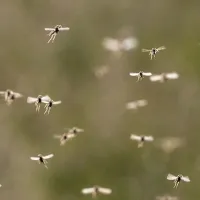
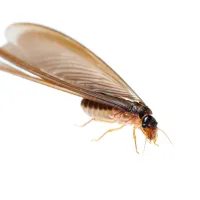
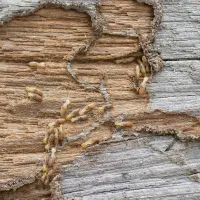
The photos above show subterranean termite swarmers and the milky white termites are known as the workers.

Believe it or not, these tiny insects cause over 3 Billion dollars in damage every year, and this number will continue to rise as each year passes. Termites cause more damage to homes than tornados and hurricanes combined!! Its estimated that termites cause damage to over 600,000 US homes each year. Unbelievable for such a small insect. It is recommended that every home owner no matter where you may live should have a termite inspection at least once a year. Its being proactive that will help you identify a problem early so that the damage can be limited. There are some signs that you as a home owner can look out for in the meantime. First and foremost would be the swarmers. These tiny black winged insects appear every spring. You will sometimes see them flying around your basements or even in your living space in your home. You may also just find the wings left behind by the swarmers. You may also notice shelter tubes on interior or exterior walls of you home. Worker termites build these tubes from particles of soil and wood that are held together by salivary secretions and fecal matter.The tubes may be thinly constructed or large and thick walled to accommodate larger numbers of termites to move between the colony and the food source.

Examples of shelter tubes above.

Subterranean termites colonies are made up of 3 cast members. Reproductive, Soldiers, and workers. Primary reproductive termites are called swarmers or alates. They are black to a yellowish-brown in color and their wings are pale to light brown. They are 1/4 to 3/8 of an inch long. Secondary reproductive termites rplace primarys when needed, for instance when a queen is injured or dies. They are white to a cream color and may have short wing buds. Termite workers make up the largest group in the colony. Workers are wingless, creamy white and about a 1/4 to 3/8 inch long. They are responsible for the feeding of others, grooming the queen and creating nests and tunnels. Soldiers resemble the workers in color and appearance except they have have a larger brownish head with strong mandibles or jaws. They are the protectors of the colony.

Above you have a soldier beside a worker as well as a picture of a queen.

Termite swarmers are commonly confused with ants, therefore it is imperative that you as a homeowner have a highly trained pest control professional conduct a detailed inspection of your home. I hope I was able to shed a little light on termites and the potential problems they will cause you in the future. Remember (and I cant stresas this enough) have you home inspected at least once per year. Inspections are very inexpensive compared to the cost that can be involved in replacing sections of your home due to significant termite damage.

Posted in Uncategorized | Tagged , , , , , , , , , , , , , , , , , , , | Leave a comment

TICKS…Quick Facts

IDENTIFICATION:

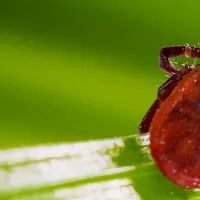
Ticks are arachnids belonging to the sub-class Acari, which includes both mites and ticks. Over 80 species of ticks have been identified in the U.S. These can de divided into two families: the hard ticks (lxodidae) and the soft ticks (Argasidae). Both famileis are associated with the transmission of diseases to humans, but the members of the hard tick family are more frequently encounterd in and around homes. Within the family of hard ticks there are several species referred to as “wood ticks” that are of key importance due to their frequent interaction with humans in the outdoor environment and the transmission of some serious diseases. Among them are the balck-legged tick (deer tick), the Rocky Mountain spotted fever tick (Dermacentor anderson), American dog tick (Dermancentor variabilis) and the lone star tick.


BEHAVIOR:

The life cycle of the hard ticks involves 4 stages. It begins with the femaile laying eggs. Depending on the species, clusters of hundreds to thousands of eggs may be laid in protected cracks and crevices, which develop into six-legged larvae. The larvae will then crawl to a place where they may brush up against a passing host. The larvae will crawl onto the animal and begin feeding on its blood. Feeding takes a matter of days before the larvae is fully engorged, at which time it drops off the animal. Several weeks later the larvae molts and emerges as a nymph. At this time the nymph climbs again onto a similar site where it waits for the next host animal and repeats the process. The final instar nymph molts into an adult. The adult is capable of waiting significant periods of time before feeding, in some cases 6 to 9 months. Once the adult female has attached to and fed from a host, she then detaches and can only then begin to lay eggs.

QUESTING:

Ticks spend most of their time waiting to attach to a host animal in a process called questing. Ticks cant fly or jump, so they are dependant on their hosts coming to them to provide a meal. In order to take advantage of these opportunities, ticks will climb up the stems of tall grass, weeds or other suitable objects and wait patiently for a passing mammal to brush up against them. Ticks can sense a suitable host by detecting chemical cues-especially carbon dioxide, vibrations and motion. When they sense a host approaching, they hold out several of their legs and cling to it as it passes by or they may simply drop from a perch onto the host.

HEALTH RISKS:

Ticks have been implicated with vectoring many diseases to humans. Rocky Mountain Spotted Fever, Relapsing Fever, Lyme Disease and Encephalitis are among the more serious. The real danger from ticks arises from the hosts they choose during the early stages of their life cycle. In may cases, they feed from animals which are reservoirs of diseases. Such is the case for the Black Legged tick whose larvae and nymphs feed on the blood of the white footed mouse, a known reservoir of Lyme Disease, then commomly vector this disease to humans. A well executed tick control program and common sense measures of avoiding tick bites go a long way in reducing the hazards ticks pose around the home.

Posted in Uncategorized | Tagged , , , , , , , , , , , , , , | Leave a comment

MOSQUITOES A BRIEF OVERVIEW

Identification:

Over 150 species of mosquitoes have been identified in the U.S. The 4 most significant genera and selected pest species are Culex (northern house mosquito, southern house mosquito), Anopheles (common malaria mosquito) Ochlerotatus (eastern salt-marsh mosquito) and Aedes (yellow fever mosquito). These represent  most of the commonly encountered blood feeding and disease vectoring mosquitoes in the U.S. With spring/summer fast approaching this information can be extremely valuable to anyone who has concerns about these pesky and potentionally dangerous insects.

DISTRIBUTION:

Mosquitoes can be found throughout all areas of the U.S. Each of the many species of mosquitoes has its own particular niche for breeding and survival. For instance, in some species their eggs are required to freeze over the winter to maintain viability, other species require long dry periods for survival. Some species thrive only in salt marshes, while others have adapted well to laying eggs in tree holes, temporary pools of standing water or even small containers found in homeowners’ yards. Due to this wide diversity of habitat preference, each region has species of mosquitoes that thrive in the local environment.

MOSQUITO BEHAVIOR:

There is some variation from species to species on details of development cycles, but in general, mosquitoes lay eggs in or around water, where they develop into larvae. The larvae are aquatic and will molt four times, pupate and finally emerge as adults. The adult atage is the only stage associated with biting humans. Some mosquitoes are strong fliers, such as salt marsh mosquitoes that are capable of traveling miles from their breeding area for a meal. Others stay close to their breeding area to feed. Also, some mosquitoes feed more actively in the day, while others are more active at night. When not feeding, adult mosquitoes rest in protected places, usually dark, damp areas with little air movement which provides them cover from the elements. Male mosquitoes do not feed on blood. Instead, they feed upon plant nectar. Females of most species, but not all, must take a blood meal in order to obtain the protein needed for egg development. Female mosquitoes are quickly attracted to humans and other warm-blooded animals through their ability to perceive movement, sense thermal cues and detect chemicals expressed through respiration.

HEALTH RISKS AND ITS IMPACT ON MOSQUITOES:

Mosquitoes have been implicated in vectoring many diseases to humans. Malaria, encephalitis and West Nile virus are among the more serious. Yellow Fever and Dengue Fever are two other very serious problems worldwide. Aside from the serious health tisks, mosquitoes’ presence is annoying to humans who spend time outdoors, their bites produce itchy welts and the enjoyment of many outdoor areas is curtailed.

Posted in Moquitoes | Tagged , , , , , , , , , , , | Leave a comment

Rodents and Rodent Proofing Your Home

 Rodents and Rodent Proofing your home


Here are the FACTS!!!

Rats multiply quickly, with as many as 6-7 litters per year and up to 12 offspring per litter. Two rats under ideal conditions can multiply to 30,000 in one year. How you ask? I guess I should mention rats reach sexual maturity in as little as 2 months. Balance and climbing? Rats and mice are agile climbers. They can climb up surfaces such as brick walls and other rough surfaces that offer footholds. They can balance on power lines, ropes, phone lines and clothes lines. With their exceptional balance skills they can enter your home through entry points on the side of your home, on your roof and even an open window! Rats have the ability to squeeze through openings as small as ½ inch and mice ¼ of an inch. Rats are constantly gnaw anything softer than their teeth. Items include aluminum sheeting, improperly cured concrete, brick and wood. Burrowing…Rats can burrow to a depth of 4 feet. How about this…Rats can swim up to half a mile, travel through sewer lines go through water plumbing traps, and oh yes don’t be surprised if one appears in your toilet! Mice can swim well when they need to. Rats and mice are both excellent jumpers, rats can jump vertically 36 inches and horizontally 48 inches. Also a 50 foot drop will not kill or seriously injure rats. Mice can leap 12 inches vertically, and can fall from a height of 12 feet without injury.  Listed above are excellent reasons to be vigilant and inspect your residence, whether it’s an apartment or a private house. You should look for any cracks or holes in the foundation, exterior walls, burrows around your home and rodent droppings in your home. All of these are signs of potential problems, letting you know you either have or will have a rodent dilemma in the very near future. These areas that I listed as entry or access points should be sealed, repaired and treated by a trustworhty pest professional. You should always address any rodent trouble or potential problem quickly because they carry disease and you risk future problems that are more serious than the actual rodent itself. Rats and mice spread over 35 diseases worldwide. These diseases can spread to humans directly, through handling of rodents, through contact with feces, urine, or saliva, or through rodent bites. Diseases carried by rodents can also spread indirectly, through ticks, mites or fleas that have fed on the infected rodent. can also be spread to humans indirectly, through ticks, mites or fleas that have fed on the infected rodent. Here are just a few diseases that rodents can spread.

-          Hantavirus

-          Murine Typhus

-          Rat Bite Fever (RBF)

-          Salmonella

-          Eosinophilic Meningitis

As you can see by these diseases they are nothing to play with. They are very serious, and besides getting very sick they can be lethal.

I just want to add that in addition to the various items a rodent will gnaw on, you might want to add electrical wiring to the list. This, as we all know is a fire hazard! So do yourself a favor and do periodic checks of your home, and if you see any signs, contact a reputable Pest Control Company. Don’t try and handle the issue on your own, you can potentially make the problem worse.

Posted in Rodents | Tagged , , , , , , , , , , , | 2 Comments

Quick Bed Bug Facts

Ever heard the saying…

Knowledge is the true organ of sight, not the eyes.”

Take the time now to learn some facts about bed bugs so you don’t have to sleep with one eye open.

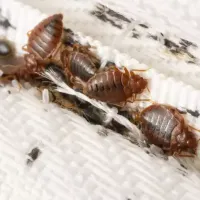
What bed bugs look like:                                                                                                                                                                                  Bed bugs are thin, tiny, flattened, oval shaped bugs. At adult age they grow no larger than an apple seed, about 1/4 inch long (6mm) and less than 1/8 inch wide (3mm).  Although bed bugs have small wing pads, they are wingless. They have a four segmented antenna and a three segmented beak or mouthparts that rest in a groove underneath the head and thorax.  The color ranges from brown to reddish brown, reddish brown being a sign of blood consumption. You can tell the difference in males and females by looking at the tip of the abdomen. The females will be rounded and the males will be more pointed. 

The Bed Bug’s Cycle of Life                                                                                                                                                                           Each of the five bed bug nymphal stages is a smaller version of the adult, but without the wing pads. Eggs are pearly white and about 0.04 inch long (1 mm). Typically, a nymph can fit into a crevice only slightly wider than a business card is thick. Female bedbugs can lay 5-7 eggs per week and will hatch in 7-10 days under room temperature. If she is able to feed regularly and has the opportunity to mate periodically, she can lay eggs throughout her life, which can range from 6-18 months but can be as long as 2 years. During the female bed bugs lifetime she may lay from 200-500 viable eggs. Bedbugs feed only on blood and do require a blood meal in order to molt. However, they can survive for long periods of times without a bloodmeal, some surviving up to a year under certain conditions. Females lay their eggs individually, and almost always close to their harborage site. The ideal site to lay her eggs would be on textured materials such as fabrics, wood, along the edges of baseboards, behind picture frames or furniture. Bed bugs will cluster together in harborage sites for protection from predators, and to make their search for mates easier. However Bed bugs will leave their harborage sites when driven by hunger to find a host, and return to them when they have had an adequate bloodmeal. The harborage sites are typically close to the host, but can also be surprisingly far from the host, often up to 20 feet and occasionally as far away as 60 -70 feet. Bed bugs move pretty quickly, nymphs up to 11 inches per minute and adults up to 4 feet per minute.

Where Bed Bugs  Live                                                                                                                                                                                            In all stages, bed bugs will be packed together in the harborage sites, the droppings, the shed skins, the eggs and the debris. Bed bugs prefer dark areas to feed, they do not like air movement and will move out of drafty locations. While these bugs do love beds because of the constant meal ticket every night, bed bugs can be found in all furniture, in carpets, under wallpaper, behind baseboards and in small cracks and crevices throughout a room.

Signs of Bed Bug Infestation                                                                                                                                                                          Bed bugs will leave multiple red, itchy bite marks on the body. A large amount of red-black fecal material will be found anywhere bed bugs live (ie. tiny blood stains or smears will appear on the bed sheets). Other places bed bugs are seen will be clinging to furniture, mattresses, or any other dark hiding spot. The least obvious sign of infestation may also be detected as a faint sweet, musty odor. 

How to Get Rid of Bed Bugs                                                                                                                                                                            Call a pest control professional if you know you have bed bugs or if you are not sure and need a professional assessment. Do not waste your time and money trying numerous home remedies.  Remember, to trust the knowledge of the experts. Their knowledge is the best tool used in order to detect, identify and irradicate the problem. These bugs are trained to stay out of your eye sight. 

Posted in Bed bugs | Tagged , , , , , , , , , , , , , , | 2 Comments
Quality Pro
National Pest Management Association
New York State Pest Control Management Professionals