
Why Termite Swarmers Appear at Windows Every Spring
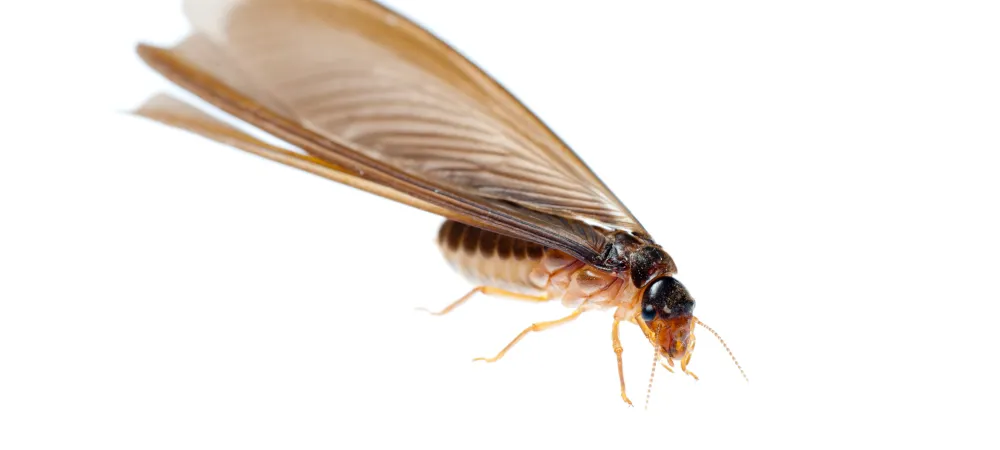
Seeing winged insects clustering at your windows on a warm spring afternoon is unsettling for good reason. For homeowners in Westchester County and the greater New York area, that sight is often the first visible sign of a termite problem that has been developing for some time.
What You Need to Know
- Termite swarmers are winged reproductive termites that emerge from mature colonies each spring to find mates and establish new colonies.
- Swarmers appearing on the inside of windows almost always indicate an active termite colony within the structure itself.
- Swarmers do not cause structural damage, but the colony producing them does. A swarm is a signal, not the problem itself.
Swarmers are easy to dismiss as flying ants or a seasonal nuisance. Understanding what they actually are and what their presence at your windows means is critical to responding appropriately.
What Are Termite Swarmers?
Termite swarmers, also called alates, are the winged reproductive members of a termite colony. Their role is specific: leave the colony, find a mate, and establish a new colony elsewhere. They are not the workers causing structural damage. They are the signal that a colony is mature, large enough, and sufficiently established to begin reproducing and expanding.
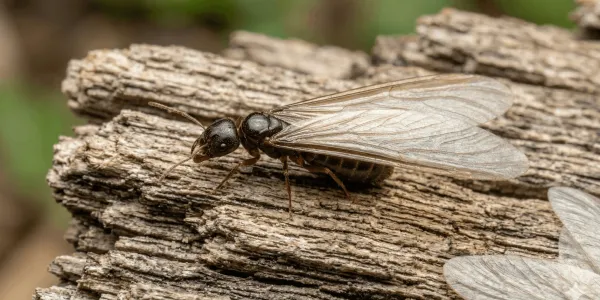
Swarmers are identifiable by their dark brown to black bodies and two pairs of equal-length wings that extend well beyond their bodies. This distinguishes them from flying ants, which have wings of unequal length and a pinched waist. After landing, swarmers shed their wings, which is why small piles of discarded wings near windows and baseboards are a common first indicator of swarming activity.
Are Termite Swarmers the Same as Regular Termites?
No. A termite colony contains three distinct castes: workers, soldiers, and reproductives. Workers are the pale, wingless termites responsible for feeding the colony and consuming the structural wood in a home. Soldiers protect the colony. Swarmers are the reproductive caste, produced when the colony has reached sufficient size and resources to expand. They emerge once a year, swarm briefly, and most do not survive long. The workers remain behind, continuing to feed.
Why Do Termite Swarmers Fly Toward Windows?
Swarmers are strongly attracted to light, a behavior that serves their biological purpose. Light draws them toward open spaces, which is where they need to be to find mates and locate new nesting sites. Windows concentrate natural light and represent the clearest path from the interior of a structure to the outside. When swarmers emerge from a colony inside a wall or beneath a floor, they navigate toward the brightest available light source, which is typically a window.
This attraction to light is specific to the swarmer caste. Worker and soldier termites actively avoid light and remain hidden inside wood and soil, which is one reason termite infestations go undetected for so long before swarmers appear.
What Does It Mean When Swarmers Appear on the Inside of a Window?
Swarmers found on the inside surface of a window, clustered on the glass or the sill, are trying to get out of the structure. They emerged from a colony somewhere within the building and are seeking a way to the exterior. This is a clear indicator of an active termite colony inside the home, not just in the vicinity. The colony has been established long enough to produce reproductives, which typically takes several years. According to the University of Kentucky Entomology department, eastern subterranean termite colonies generally require three to five years to reach the size needed to produce swarmers in significant numbers.
Swarmers on the Outside vs. Inside of Windows: What Is the Difference?
The location of swarmer activity tells a different story depending on which side of the glass they are on:
- Outside the window: Swarmers on the exterior are likely emerging from a colony in the soil, a nearby tree, or a wood structure on the property. They are attracted to light from inside the home and congregating at the glass. This indicates a colony in the immediate area and a risk of structural infestation, but does not confirm one inside the home yet.
- Inside the window: Swarmers on the interior have already emerged from within the structure. This confirms an active colony inside the building. The swarmers are attempting to exit, not enter.
Both scenarios warrant a professional inspection. The urgency and the scope of the response are different, but neither should be ignored.
Why Do Termites Swarm in Spring?
Swarming is triggered by environmental conditions, specifically the combination of warming temperatures, increased humidity, and rainfall. In the New York area, the eastern subterranean termite, the most common species in Westchester County, typically swarms from late March through May, most often during daylight hours on warm, calm days following rain.
What Triggers a Termite Swarm?
A colony does not swarm on a set schedule. The trigger is environmental. A warm spell after a rain event raises soil temperature and humidity to the threshold at which swarmers are released. The colony may swarm multiple times in a single season if conditions repeat. The swarm itself is brief, typically lasting under an hour, but the activity it signals has been building for years.
How Long Does Termite Swarming Season Last in New York?
For eastern subterranean termites in the greater New York area, swarming season runs roughly from late March through June, with peak activity in April and May. Warm weather following spring rain events produces the most concentrated activity. Swarmers that do not find a mate or a suitable nesting site die within hours due to dehydration, which is why dead swarmers and discarded wings are often the only evidence homeowners find after a swarm event.
Does Finding Termite Swarmers Indoors Mean You Have an Infestation?
Yes. Swarmers found inside a structure are not arriving from outside. They emerge from within. Their presence confirms that a colony exists somewhere in the building and has been active long enough to mature and begin reproducing. The structural damage caused by the worker caste has been occurring throughout that period, often without any visible surface signs.
Signs of a Termite Colony Behind the Swarmers
Swarmer activity is often accompanied by other indicators that a colony has been established for some time:
- Discarded wings on windowsills, along baseboards, or near light fixtures, left behind after swarmers land and shed them
- Mud tubes along foundation walls, basement framing, or crawl space structures, built by worker termites as protected travel routes between soil and wood
- Hollow-sounding wood when tapped, indicating workers have consumed the interior while leaving a thin surface layer intact
- Tight-fitting doors or windows that were not difficult to open previously, caused by framing damage affecting the surrounding structure
- Small exit holes in drywall or wood trim through which swarmers have emerged from inside the wall
Are Termite Swarmers Dangerous?
Swarmers themselves do not bite, sting, or cause structural damage. They are short-lived, and most die within hours of emerging. The danger is what they represent. Termites cause an estimated $5 billion in structural damage in the United States each year. Eastern subterranean termites, the species responsible for the vast majority of New York-area infestations, feed continuously and silently, consuming structural wood from the inside out. A colony producing swarmers has typically been feeding in the structure for several years before becoming visible.
Why Termite Swarmers at Windows Should Not Be Ignored
Swarmers are the most visible sign that most homeowners will ever see of a termite infestation. The workers causing the damage are hidden inside wood and soil. By the time swarmers appear at windows, a colony has already established itself, grown to a significant size, and begun the process of expansion. The longer a colony feeds undetected, the more extensive and costly the damage becomes.
A swarm at a window in April is not the beginning of a problem. It is evidence of a problem that has been developing since the colony was first established, often years earlier. What it provides is a window of visibility, a moment when activity that is otherwise impossible to see becomes apparent. If you've noticed signs of an infestation, contact a professional team for treatment to remove any active infestations.